Garden Design
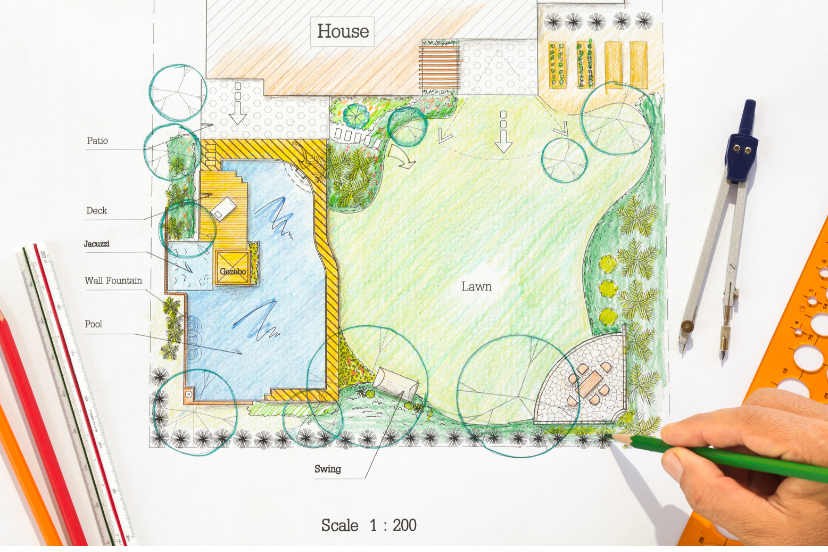
Welcome to the world of garden design!
The best gardens rarely just happen, they are planned and designed. It is worth noting that landscape design does not become easier with a smaller space. In fact, it can be more difficult and frustrating trying to fit the trees and shrubs you would ideally like into a smaller area.
Whatever size your plot, keep your garden design simple, keep to a style and develop a plan drawn to scale to see how it fits together before you start. Look at as many books as you can for landscaping ideas, shrub selection, growing suggestions and hard landscaping i.e. paths, patios, etc. Great resources for finding books are libraries, charity shops or simply borrowing from friends. By doing as much research at the beginning, you will not waste time and money and will be more likely to be assured of a great end result
In this guide, we will explore the requirements to achieve the best garden design, offering valuable insights and practical landscaping ideas to help you create a garden that’s not only aesthetically pleasing but also functional and sustainable.
The sections below are the key garden design elements you need to consider and build into your garden design. For additional ideas on Garden Design, please read my post – ‘Beautiful Backyards’.
Assessing Your Space
Size and Shape
Before diving into the design process, it’s crucial to assess the size and shape of your garden. Understanding your space’s dimensions will influence the layout and plant choices. Time spent before you lift a spade will benefit you in the end.
Sunlight and Shade
Take note of the sunlight and shade patterns in your garden throughout the day. Noting any existing buildings or trees in your, or adjoining gardens. Ideally, this should be also carried out over the different seasons as the height of the sun is lower and higher. However, this is not always practical unless you have lived in the house for a while. This will determine where you can place sun-loving or shade-tolerant plants.
Soil Quality
Assess the soil quality in your garden. Different plants and shrubs will have varying soil requirements. To get the best out of whatever you plant, it is essential to know your soil type. There are a wide range of great easy-to-use instruments for soil testing. A few will not only test the soil pH but also soil nutrients and light & soil moisture level with the press of a single button. The accurate results can be displayed clearly on a dial immediately. With this information, you can adjust the moisture & nutrient supply based on the soil test results, balance the soil ph of soil, and make your plants and shrubs grow vigorously and healthily. The HSLGOVE 4 -in-1 will do all you need to start off with and is reasonably priced.
*********************************************************************************************
Define Your Garden’s Purpose
Relaxation and Entertainment
Do you envision your garden as a serene retreat or an entertaining space? Clarify your garden’s primary purpose to guide your design choices. Consider different areas in relation to the light and shade. For example, you might want a seating area that is in the sun in the morning but some shade in the afternoon. This is obviously down to your personal preference.
Vegetable or Flower Garden
Decide if you want a garden filled with colorful blooms or one that’s productive with fruits and vegetables. Perhaps you want to have the best of both worlds by incorporating a mixture into your garden design. If space is limited you can grow some veggies in a flower bed or vice versa. Remember your garden is your design and space and there is no right or wrong choice. You alone can decide what you intend to use your garden for.
Wildlife Habitat
Consider creating a garden that attracts and supports local wildlife. You might want a more secluded area for bird feeders and wildlife. Think about planting bee and butterfly-friendly plants to encourage pollinators into your gardens. These can make a significant impact on the health of your garden.
Greenhouse
If you want to grow more exotic or temperature-dependent plants or vegetables a greenhouse will be an essential addition to your garden design considerations. There are a wide range of shapes and designs available, but where you site a greenhouse is vital to maximize its best use. Learn more from our guide to Choosing a Greenhouse
*********************************************************************************************
Garden Design Trends
Spend some time deciding on the style of garden that you want. Perhaps you have a strong sense of what your final design will look like. There are many different styles to choose from, but make sure that whatever you do finally decide on, the shrubs or plants needed are suitable for your location. Below are a few popular styles but the list is not exhaustive.
Vertical Gardens
If space is limited consider the vertical garden design. This is a contemporary approach to maximizing green space in smaller areas. Plants are grown vertically, on walls or structures, which optimizes space utilization, making it ideal for urban settings with limited ground area. This innovative technique not only adds aesthetic appeal but also improves air quality and insulation. With versatile options for plant choices of vegetables or plants, vertical gardens bring a touch of nature to any space, transforming even the smallest urban corners into vibrant, living ecosystems.
Herb Gardens
There is nothing better than being able to use fresh herbs in your cooking. Designing an herb garden is about creating a functional and aesthetic space where you can easily access the herbs you need. It’s about balancing form and function to ensure your herbs thrive and are conveniently accessible for your culinary endeavors. Herbs can be grown in a small kitchen garden or a larger outdoor plot, perhaps amongst vegetables. If space is limited, success can be achieved using containers and pots. They can even be grown on a window sill.
Cottage Gardens
Embrace the charm of cottage gardens, characterized by wildflowers and informality. This style of garden looks spectacular but can be quite high maintenance.
Wildlife Gardens
Any size plot can offer a refuge for many types of creatures. Some people let their garden grow ‘Wild’ but a more formal garden can equally be a sanctuary for a wide range of insects, bugs and wildlife in general.
Woodland Gardens
This style needs a reasonably large garden. If you have a long back garden, many types of trees and shrubs will allow for a wonderful garden design. Try to avoid planting evergreens especially if you have bulbs in mind as these might exclude light for spring flowering bulbs.
Minimalist Landscapes
Discover the beauty of minimalism in garden design for a clean and modern look. Minimalist garden design champions simplicity and functionality. It embraces clean lines, uncluttered spaces, and a limited palette of plants and materials. Stripping away excess, this style focuses on creating a sense of calm and order, often with carefully chosen elements that serve both aesthetic and practical purposes. Minimalist gardens offer an oasis of serenity and a low-maintenance approach to landscaping that suits some modern lifestyles and spaces.
Japanese Garden Design
Although an authentic Japanese Garden design will take many hours of research and study, some of the key design features can be incorporated into any garden. For a smaller garden, this style can make the space seem much larger.
Mediterranean Garden
This style can be quite easily achieved in a backyard or smaller walled garden. Plants are best grown on a wall suitably painted to give a bright and light feeling. The flooring should ideally be paved with colored terracotta-style tile or clay pavers rather than large slabs to achieve authenticity. Plant selection is vital to achieve the illusion. So geraniums, cacti, succulents, bougainvillea and plenty of pots and ferns are needed.
Hydroponics and Aquaponics
Two reasonably new forms of gardening are Hydroponics and Aquaponics. These garden designs both revolutionize traditional soil-based cultivation. In hydroponics, plants grow in nutrient-rich water solutions, whereas aquaponics integrates fish tanks, utilizing fish waste as plant nutrients. These systems conserve water, require less space, and offer precise control over plant growth. Hydroponics emphasizes mineral nutrient solutions, while aquaponics creates a mutually beneficial ecosystem between plants and fish. Both methods challenge conventional gardening by offering efficient, sustainable, and space-saving alternatives that cater to various needs and preferences. These forms of gardening I have expanded on here.
*********************************************************************************************
Garden Design Software
Planning Tools For Garden Design
Explore software and apps that can aid in garden planning and design. There are many great digital programs available that will aid with garden design.
Check out Ideas4Landscaping
This product offers step-by-step blueprints and pictures of over 7250 different landscaping designs. The creator, Helen Whitfield offers a simple, efficient, and user-friendly online gallery for landscaping inspiration to design your dream landscape. Inside this massive database, you’ll find 1’000s of landscaping pictures in 60+ categories consisting of:
Backyards
Front Yards
Gardens
Patios
Decks
Walkways
Lawns
And Many More…
This massive collection of photos, ideas, and simple step-by-step details is designed to help with your garden design and achieve the perfect landscaping.
Visualization Apps
Use visualization tools to see how your garden design will look in real life.
*********************************************************************************************
Budgeting for Your Garden Design
Setting Priorities
Before you start on your garden design decide on your budget. Then prioritize where to allocate your funds for maximum impact. Hard landscaping can be expensive before you even get to buy any plants. Be realistic about what you can achieve and always allow a contingency reserve for those unexpected expenses.
DIY vs. Professional Services
Consider whether you’ll tackle the design and maintenance yourself or hire professionals. Depending on your ability and time available, consider if the project is something you’ll enjoy or not. Gardening can be physically demanding, so work within your limits and the project timescale, if there is one!
*********************************************************************************************
Choosing the Right Plants
Companion Planting
Companion planting, an age-old organic gardening technique, revolves around fostering a harmonious ecosystem within your garden by intermingling plants that offer each other mutual advantages. When these carefully chosen plants share the same space, they help to promote pollination, ward off diseases, and effectively deter pests. These partnerships come in various forms: some companion plants have fragrances that deter pests searching for their preferred host plants, others possess remarkable antibacterial or anti-fungal properties, and a few attract beneficial insects like ladybugs and lacewings, natural predators of aphids, to join the garden party.
While companion planting is often associated with the vegetable patch, it’s worth noting that even favorites like roses can experience enhanced vitality when they have compatible plant neighbors. There are several great books for reference available. Learn more
Native Plants vs. Exotics
Explore the benefits of using native plants and the considerations when opting for exotic species. This will depend on your location and climate. Never try to plant something unsuitable for the local environment.
Seasonal Interest
Plan for year-round beauty by selecting plants that provide interest in every season. Most gardens look great in the summer months with many flowering plants, but consider shrubs and trees that give winter color from leaves, bark and stems.
Maintenance Considerations
Factor in the maintenance requirements of your chosen plants. Low-maintenance options may be preferable for some gardeners. Borders and flower beds will need continual weeding to look good. If this is something you prefer not to do then use more grass or hard landscaping to reduce these areas.
*********************************************************************************************
Creating Hardscape Features
Paths and Walkways
Designing pathways can enhance the flow of your garden and create a sense of exploration. There are so many options available now from the simplest of gravel paths to slab or resin styles. The cost will need to be a consideration when deciding.
Patios and Decks
Consider outdoor living spaces, such as patios and decks, to expand your garden’s functionality. If you plan to entertain often then it might be worth incorporating permanent design features such as BBQs and fire pits into your garden layout.
Water Features
A water feature can add so much to a garden regardless of the space available. The sound of water can have such a soothing effect and help with our well-being. Think about a permanent water and electricity supply should a pump or lights be required. It is essential to plan a route for these services at the landscaping design stage. Ideally, try to keep a pond away from trees due to falling leaves and be aware of safety especially if children are going to be using the garden.
Outbuildings
Decide if you will need additional storage from a shed or a garden room. You will need to be able to store garden machinery, tools and garden furniture. Perhaps you have a garage you can utilize, but if not a shed is extremely useful. Consider how you can run a power and water supply should you need one.
*********************************************************************************************
Incorporating Garden Design Elements
Color and Texture
Learn how to use color and texture effectively to create visual interest in your garden. Seasonal interest should be thought about to keep the garden looking great all year round.
Focal Points
Discover the importance of focal points to draw the eye and create a cohesive design. Clever use of paths, hedges and mirrors can add interest and intrigue to any garden.
Balance and Harmony
Achieve a harmonious balance in your garden by carefully arranging elements. This can sometimes be the most difficult part of garden design. Unless you have a good artistic eye, it is difficult to visualize how all the pieces fit together. Think about computer programs and apps to help you visualize your design, or seek professional advice.
*********************************************************************************************
Sustainable Garden Design Practices
Water Conservation
Explore water-saving techniques such as drip irrigation and rain barrels. Rainwater is often much better for watering plants certain types of plants and collecting rainwater helps save on natural resources.
Pest Control
Learn about eco-friendly pest control methods to protect your garden especially if you are going to garden organically. Even if you are not, It is far better to avoid the use of pesticides and insecticides especially on fruit and vegetables. Nature has some wonderful options for bug control. Using these will help the environment and also save you money. Learn more here.
Composting
Discover the benefits of composting and how to implement it in your garden. Composting is a complete subject on its own. It is too complex to go into great detail here, but I can assure you a composting area if possible, should be incorporated into your garden design. Producing your own compost will improve your soil and also save money. Tip: Allow more space than you think you need!
*********************************************************************************************
Maintenance Tips
Regular Pruning and Weeding
Maintain the health and appearance of your garden through regular upkeep. This goes without saying but regular weeding and pruning etc. will keep your garden looking at its best.
Mulching
Understand the benefits of mulch and how it can improve soil quality. Mulching will also help keep weeds at bay and keep moisture in the soil to benefit your plants.
Seasonal Cleanup
Plan seasonal cleanups to keep your garden looking its best year-round.
*********************************************************************************************
Personal Touches
Garden Design Using Art and Decor
Add your unique personality to the garden with art, sculptures, and decorative elements. These can add so much to a garden even with the simplest of styles. For example, mirrors can make the smallest garden look much larger.
Outdoor Furniture
Select the right outdoor furniture to create comfortable seating and dining areas. Decide if you have indoor winter/ wet storage before buying. There are many different styles and materials available that can be satisfactorily stored outdoors should indoor space be a problem. You do not want to spend money on a product that will only last a season or two.
Lighting
The strategic placement of lights can stylize your outdoor space, adding a touch of elegance and charm. Imagine warm, subtle path lights guiding your way through lush greenery or fairy lights moving in the trees, creating a calming ambiance. Accentuating architectural features with uplighting or illuminating water features can turn your garden into a nighttime masterpiece. The correct lighting not only enhances visibility but also sets the mood, making your garden a perfect spot for relaxation or entertaining guests. Illuminate your outdoor haven and let your garden shine with style
*********************************************************************************************
Seeking Professional Advice
Landscape Architects
Learn when to consult with landscape architects for complex projects. If you don’t intend to do the design or build yourself, contact local companies to get ideas and estimates. Try to use businesses that have good reviews or references. Alternatively, ask neighbors or garden centers if they can recommend anyone. Always obtain at least three estimates and ensure the complete project is itemized to make it easy to compare costs.
Garden Designers
Consider hiring garden designers for a tailored approach to your space. This will affect your budget, but if you are unsure and unable to do the work yourself, this might be the best option. See the previous paragraph regarding obtaining estimates.
Horticulturists
Seek the expertise of horticulturists for plant selection and care guidance. Your specialist garden center will be only too pleased to offer advice on plant suitability. Seek out the advice of local gardeners and consider joining a local gardening club. Here you will pick up tips, gain confidence and be able to do ‘plant and seed swaps’ saving a lot of money. Never be afraid to ask as mistakes can be very costly.
*********************************************************************************************
Nurturing Your Garden
Patience and Observation
Develop patience and observation skills to understand your garden’s evolving needs. A garden can take many years to reach maturity. Watch which plants are doing well and investigate anything that seems to be failing. Those shrubs/plants might have simply been planted in an unsuitable place, in the wrong or poor soil, or watered incorrectly. Investigate and remedy as soon as possible. Plenty of information is available in books and online to help with problems.
Adapting to Changes
Be flexible and adapt your garden as it grows and changes over time. Your requirements and lifestyle might change so be prepared to rework your garden accordingly.
Continuous Learning
Keep learning about gardening to improve your skills and knowledge. This I find the best part of gardening. The continual growth in my skills and understanding. Trying out new plants or seeds, having success taking cuttings and propagating new plants. Talking to local gardeners about their successes and failures is a great way of learning.
*********************************************************************************************
Conclusion
Designing your dream garden is a rewarding endeavor that allows you to create a space that reflects your style and preferences. By following the guidelines and tips in this guide, you can embark on a journey to transform your outdoor area into a captivating and sustainable oasis. I am sure you will have some problems, but persevere and you will overcome anything!
We hope together, we can make it- ‘Easy Peasy Gardening’ for you!
Happy gardening! 🌻
Some of the links in posts are affiliate links. We only recommend information or products of the highest quality from resources we trust. Disclaimer
*********************************************************************************************
FAQs
- How do I choose the right plants for my garden?
- Consider your garden’s purpose, sunlight exposure, and maintenance preferences when selecting plants.
- What are some budget-friendly garden design ideas?
- Opt for DIY projects, use native plants, and repurpose materials to save on costs.
- How can I attract wildlife to my garden?
- Plant native flowers, provide water sources, and create habitat-friendly spaces for birds and insects.
- Is professional help necessary for garden design?
- It depends on the complexity of your project. Professionals can provide expertise, but DIY is also an option.
- How can I maintain my garden’s beauty throughout the year?
- Regular pruning, mulching, and seasonal cleanups are key to maintaining a beautiful garden year-round.